Of all the skincare debates, this one causes the most unnecessary anxiety. People genuinely redo their entire morning routine because they are not sure whether their SPF goes before or after moisturiser. Some mix it in. Some skip moisturiser entirely. Some use sunscreen as their moisturiser.
Here is the plain answer, and then we will explain exactly why.
Apply SPF last, after moisturiser, as a standalone product. Never mix it into your moisturiser. Never apply it under moisturiser. This is not a preference — it is the only method that delivers the level of protection printed on the bottle.
Why SPF Goes Last — The Science
Sunscreen works through one of two mechanisms: chemical filters absorb UV radiation and convert it to heat; physical (mineral) filters like zinc oxide and titanium dioxide reflect and scatter UV light. Both require a continuous, uniform film on the surface of the skin to work.
Every sunscreen SPF rating — SPF 30, SPF 50, PA++++ — is measured in a lab using a specific application method: 2mg of sunscreen per cm² of skin, applied as a standalone layer to bare skin. The moment you mix sunscreen into anything else — a moisturiser, a primer, a foundation — you dilute the concentration of filters, disrupt the film-forming chemistry, and reduce the protection. By how much? Studies from the Journal of the American Academy of Dermatology suggest SPF can drop by 40–70% depending on what you mix it with and in what ratio.
Applying moisturiser on top of sunscreen has the same problem in reverse — the moisturiser disrupts and dilutes the sunscreen film that has formed on your skin surface.
"SPF 50 sunscreen mixed with moisturiser still gives SPF 30 protection." This is not how it works. If you mix an SPF 50 sunscreen 50/50 with a moisturiser, you do not get SPF 25. The protection depends on both the concentration of UV filters AND the integrity of the film. You may get SPF 10 or less — and there is no reliable way to know. The only guarantee is the tube you apply correctly.
What About Moisturiser First?
Yes — moisturiser goes before SPF. The confusion comes from people thinking that anything that goes "on top" gets applied last. But the logic is simpler: sunscreen needs to be your outermost layer because it functions as a barrier. Whatever you apply on top of it penetrates through it, disrupts the film, and reduces protection.
The correct morning sequence is:
1. Cleanser → 2. Toner / Essence (if using) → 3. Serum (Vitamin C, niacinamide, etc.) → 4. Eye cream (if using) → 5. Moisturiser → 6. SPF — last, always last
Wait 30–60 seconds after your moisturiser before applying SPF. This gives the moisturiser time to partially absorb and settle, so the two products do not mix on the surface of your skin. You do not need to wait until the moisturiser is fully dry — just until it is no longer tacky and shiny.
Can You Use Sunscreen as Your Moisturiser?
In some cases, yes — but only if your sunscreen is genuinely moisturising enough for your skin type. Many modern Indian sunscreens — particularly Korean-formulation SPF 50 PA++++ products — contain hyaluronic acid, ceramides, or niacinamide and provide enough hydration for oily and combination skin types to skip a separate moisturiser.
If your skin feels tight or dry after applying your sunscreen, you need a moisturiser underneath it. If your skin feels comfortable and not dehydrated throughout the day, you may not.
| Scenario | Correct? | Why |
|---|---|---|
| Moisturiser → SPF (standalone, last step) | ✅ Correct | SPF film is intact, concentration not disrupted |
| SPF as only step (if hydrating enough) | ✅ Correct | Film intact, no mixing — works for oily skin |
| SPF mixed into moisturiser | ❌ Wrong | Dilutes filters, disrupts film chemistry |
| Moisturiser applied on top of SPF | ❌ Wrong | Disrupts SPF film from above |
| SPF mixed into foundation or BB cream | ❌ Wrong | Severe dilution — can drop to SPF 8–12 |
| Foundation or primer on top of SPF | ⚠️ Reduces slightly | Some disruption inevitable — reapply midday |
The India-Specific Reality: Heat, Humidity & Hard Water
In Indian conditions, SPF application has two additional complications most Western skincare guides do not address.
Problem 1: Pilling and balling
In high humidity — Mumbai in monsoon, Chennai year-round — layering multiple products before SPF can cause pilling. The sunscreen sits on top of half-absorbed layers and rolls off when you touch your face or apply makeup. The fix: use thinner, water-based serums and moisturisers; wait longer between layers; and choose a sunscreen formulation designed for humid conditions (matte-finish, low silicone, gel-based).
Problem 2: Hard water residue on skin
If you wash your face with hard water — which most of urban India has — a thin film of calcium and magnesium mineral deposits sits on your skin after cleansing. These deposits interfere with both moisturiser absorption and SPF film formation. If your SPF consistently looks patchy or uneven despite correct application, hard water residue is a likely cause. Using a mild micellar water or low-pH toner before your moisturiser helps remove residue and lets subsequent layers sit properly.
You can check your local water hardness using the Mirha Hard Water Tool.
How Much SPF to Apply
This is where most people fail silently. The lab-certified SPF value on the bottle is measured using 2mg per cm². For an average adult face, that is approximately a full teaspoon (5ml) of sunscreen — far more than most people use.
In reality, most people apply 0.5–0.8mg per cm². At 0.5mg/cm², SPF 50 delivers approximately SPF 7 in practice. The "square root rule" from dermatology: actual SPF = (applied SPF) raised to the power of (actual dose / standard dose). Under-application is the biggest single reason sunscreens fail.
Practical guide:
- Face only: ½ to ¾ teaspoon (2–3ml minimum)
- The "two-finger rule" (two lines of product from index to middle finger tip to knuckle) is a reasonable heuristic for face-only application
- If in doubt, apply more than you think you need
Reapplication: The Step Everyone Skips
SPF degrades with UV exposure, sweat, touch, and sebum. In an Indian outdoor environment — or indoors near windows receiving direct sunlight — reapplication every two hours is the dermatological standard.
For people who wear makeup or cannot reapply liquid SPF midday, SPF powder or a physical-filter mist applied over makeup is a reasonable compromise. It is not as effective as a full reapplication but is significantly better than nothing.
Recommended Sunscreens for Layering
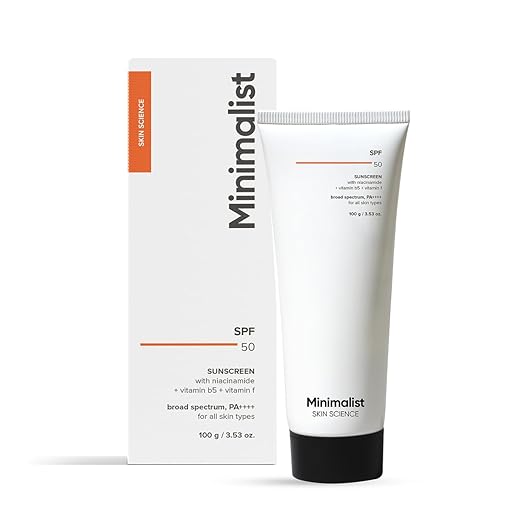
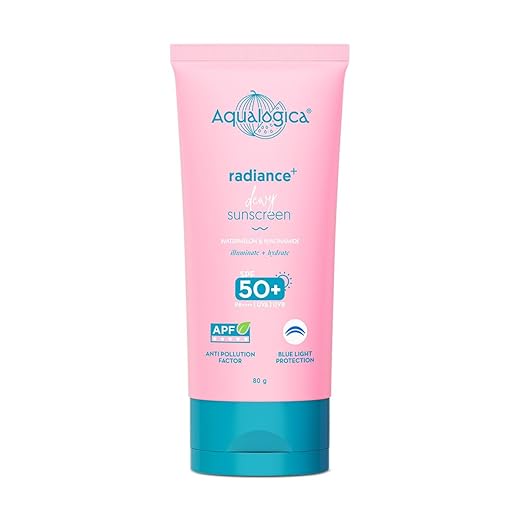
Top broad-spectrum sunscreens formulated for seamless layering over moisturiser on Indian skin without white cast or pilling:
Do You Still Need SPF Indoors?
Yes — specifically because of UVA radiation. UVB (the burning ray) is largely blocked by glass, but UVA (the ageing, pigmentation-causing ray) penetrates glass with almost no reduction. If you sit near a window, you are receiving meaningful UVA exposure. And if you are working on a screen indoors, blue light has some (minor, but measurable) effect on melanin production.
For fully shaded indoor environments with no window exposure, the case for SPF weakens. But if you have a window within sight of your face, wear SPF. It takes 30 seconds.
- Best Sunscreens in India That Actually Work (2026)Full ranked list →
- Best Sunscreen for Oily Skin IndiaMatte picks →
- The Complete Skincare Layering Order GuideFull sequence →
- Niacinamide vs Vitamin C — Which Does Indian Skin Need?Actives guide →
- Damaged Skin Barrier: How to Actually Repair ItBarrier repair →
- Petersen B, Wulf HC. Application of sunscreen — theory and reality. Photodermatology, Photoimmunology & Photomedicine. 2014;30(2–3):96–101. Wiley
- Lim HW, et al. Current challenges in photoprotection. Journal of the American Academy of Dermatology. 2017;76(3):S91–S99. JAAD
- Diffey BL. An appraisal of the efficacy of photoprotection. Photodermatology, Photoimmunology & Photomedicine. 2018. PMC
- Schneider SL, Lim HW. Review of environmental effects of oxybenzone and other sunscreen active ingredients. Journal of the American Academy of Dermatology. 2019. JAAD
This post contains affiliate links to Amazon India. Purchases made through these links earn Mirha & Co. a small commission at no extra cost to you. Product selection is based on ingredient research, dermatologist guidance, and verified customer reviews. No products are gifted or sponsored.