India receives some of the highest ultraviolet radiation levels on the planet. The UV index in Delhi, Mumbai, Chennai, Bengaluru, and Hyderabad regularly reaches 10–12 — classified as "very high" to "extreme" — for six or more months of the year. At these levels, unprotected skin can begin sustaining cellular DNA damage in as little as 15 minutes of midday exposure.
This is not an abstract risk. It is the direct, measurable driver of hyperpigmentation, melasma, premature ageing, and uneven skin tone — the four most common skin complaints among Indian adults. SPF 50 is not a beauty product. It is the single most clinically validated intervention for skin health available without a prescription.
This guide covers the science, debunks the most persistent myths, explains exactly how much to apply and when, and reviews the five sunscreens from your shelf that are worth your daily commitment.
Why Indians Need SPF 50+ Specifically
SPF (Sun Protection Factor) measures protection against UVB radiation, which causes burning and DNA damage. SPF 30 blocks approximately 97% of UVB. SPF 50 blocks approximately 98%. That 1% difference sounds minimal but translates to a 50% reduction in the UV dose reaching your skin — relevant when UV index is consistently above 8. PA++++ rating (Asia-Pacific standard) indicates UVA protection at the highest verified level. UVA causes the pigmentation and photoageing that Indians are most concerned about. Both SPF and PA ratings matter. A product with only SPF and no PA rating is incomplete protection for Indian UV conditions.
Diffey BL. A method for broad spectrum classification of sunscreens. Int J Cosmet Sci. 1994;16(2):47–52.There is a common belief that melanin-rich Indian skin provides sufficient natural sun protection, making sunscreen unnecessary. This is false, and dangerous. Melanin does provide some UV protection — equivalent to approximately SPF 13. Against a UV index of 10–12, this is entirely inadequate. A 2020 study in the Indian Journal of Dermatology found that 72% of melasma cases in India — the most common pigmentation disorder — were directly attributable to UV exposure without adequate protection. Melanin cannot protect against its own overproduction triggered by UV.
How Much Sunscreen to Apply
The standard clinical recommendation is two milligrams per square centimetre of skin surface — which translates to approximately a quarter teaspoon (1.25 ml) for the face and neck alone. Most people apply 20–50% of this amount, which means a product labelled SPF 50 is effectively providing SPF 15–25 at typical application amounts.
The practical rule: two finger-lengths of product along your index and middle fingers, applied to your face and neck before going outside. If you are not using that much, you are not getting the SPF on the label.
Reapplication: SPF protection degrades with UV exposure, sweat, and sebum. For outdoor use or prolonged window exposure, reapplication every 2–3 hours is clinically indicated. For a typical office routine with minimal direct sun exposure, morning application is sufficient.
The belief that all sunscreens leave a white cast on darker Indian skin tones is based on older mineral (zinc oxide / titanium dioxide) formulations. All five sunscreens reviewed below are chemical or hybrid formulations tested specifically for no white cast. The white cast era is over. If your current sunscreen leaves a cast, it is a formulation problem — not an inherent property of SPF.
The 5 Best Sunscreens for Indian Skin: Reviewed
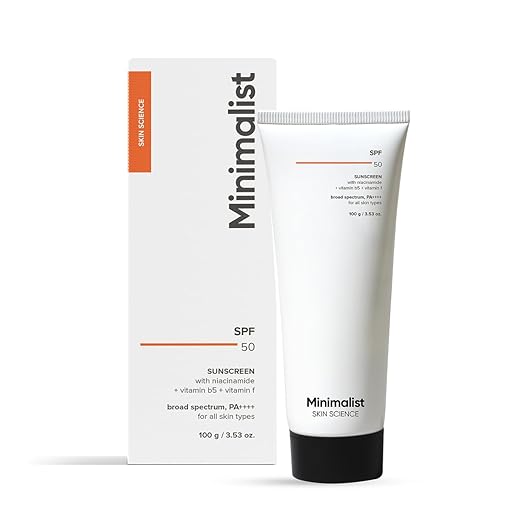
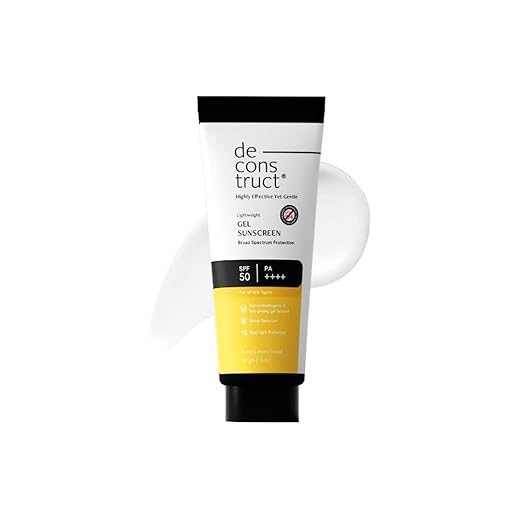
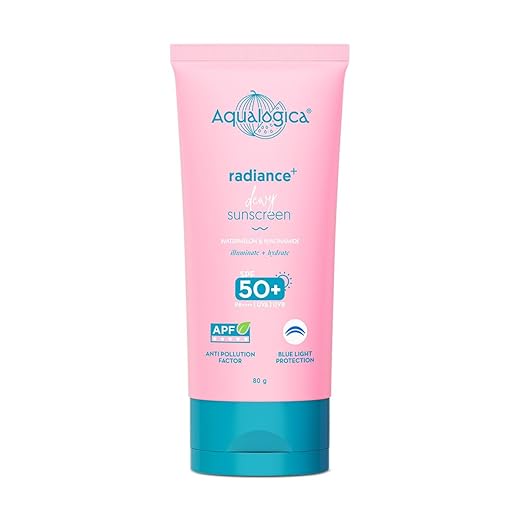
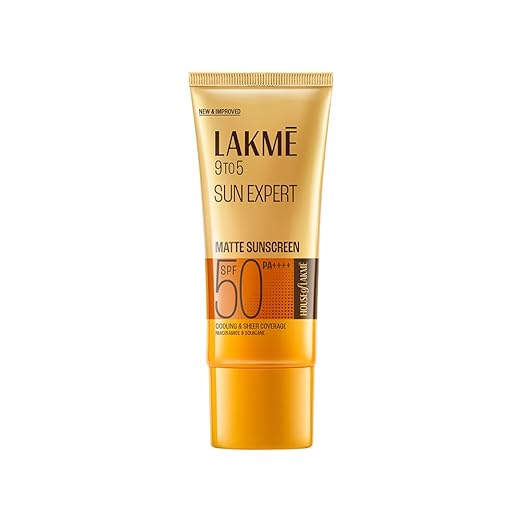
Comparison Table
| Product | SPF/PA | Size | Price | Texture | Best For |
|---|---|---|---|---|---|
| Minimalist SPF 50 | 50 / PA+++ | 100gm | ₹533 | Cream | Best Overall |
| Deconstruct Gel | 50 / PA++++ | 50gm | ₹281 | Gel | Oily skin |
| Aqualogica Radiance+ | 50 / PA++++ | 80g | ₹388 | Dewy | Glow + Anti-pollution |
| Lakme SPF 50 | 50 / PA++++ | 100ml | ₹282 | Lotion | Best budget |
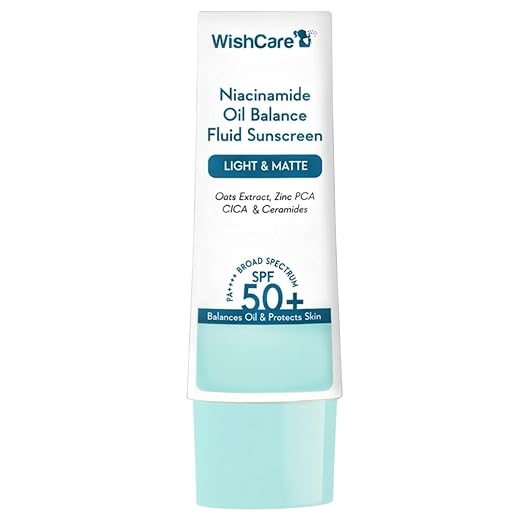
| WishCare Niacinamide | 50 / PA++++ | 50ml | ₹316 | Matte fluid | Humid climates, oily skin |
How to Integrate SPF Into Your Routine
Sunscreen is always the final step in your morning routine, applied after moisturiser. The logic: actives and moisturisers need to penetrate the skin. SPF needs to sit on top of the skin to function as a barrier. Applying it before your moisturiser means you are applying moisturiser on top of SPF and disrupting the protective layer.
The correct morning order: Cleanser → Serum → Moisturiser → SPF. Wait 2–3 minutes between moisturiser and SPF to allow absorption before layering.
If you wear makeup: apply SPF before foundation, not after. SPF setting sprays and powders are suitable for reapplication over makeup but do not replace the base application.
Frequently Asked Questions
- Diffey BL. A method for broad spectrum classification of sunscreens. Int J Cosmet Sci. 1994;16(2):47–52. Wiley
- Sarkar R, et al. Melasma in Indian patients — a consensus statement of the Indian Pigmentary Expert Group. Indian J Dermatol. 2020. Indian J Dermatol
- Lim HW, et al. Current challenges in photoprotection. J Am Acad Dermatol. 2017;76(3 Suppl 1):S91–S99. JAAD
- Narayanan DL, et al. Ultraviolet radiation and skin cancer. Int J Dermatol. 2010;49(9):978–986. PubMed
This post contains affiliate links to Amazon India. Purchases through these links earn Mirha & Co. a small commission at no extra cost to you. Product selection is based on ingredient research, clinical testing standards, and verified customer reviews. No products are gifted or sponsored.