SKINCARE
AC Face: Why 8 Hours in Central Air Conditioning Secretly Mummifies Your Skin (And Why Hyaluronic Acid Makes It Worse)
Notice your skin feeling tight, dull, and weirdly greasy by 4 PM? Central office AC drops indoor humidity below 25%, causing severe moisture evaporation while tricking hyaluronic acid into dehydrating you from within. Here is the derm-backed desk protocol that stops AC Face.

The 4 PM Mirror Shock: The Biology of 'AC Face'
You leave for work at 8:30 AM with fresh, glowing skin. By 4:00 PM in your tech park or corporate glass office, you catch your reflection in the restroom mirror: your forehead is slick with shine, yet smiling makes your cheeks feel uncomfortably tight and parchment-like.
Welcome to AC Face—a modern dermatological phenomenon affecting millions of corporate and remote professionals who spend 8 to 12 hours a day bathed in central air conditioning.
Commercial HVAC chillers work by condensing and stripping water vapor out of the air before recycling it. By noon, office indoor relative humidity (RH) routinely plummets below 20% to 25%—a moisture level significantly drier than the arid Sahara Desert.
In response, the ambient room air behaves like an invisible thermodynamic sponge, aggressively sucking moisture out of your stratum corneum in an accelerated process known as Transepidermal Water Loss (TEWL).
To survive microscopic barrier fissures caused by this flash-dehydration, your skin’s sebaceous glands enter panic mode, over-compensating with an emergency surge of sebum. The result is the classic AC paradox: an oily film on top, but bone-dry, dehydrated living cells underneath.
The Hyaluronic Acid Trap: Why Your ₹1,000 Serum Is Backfiring at Your Desk
When office workers notice tight, flaking skin, their immediate instinct is to slather on a high-concentration Hyaluronic Acid (HA) serum. In an air-conditioned office, this is often the worst thing you can do.
Hyaluronic acid is a powerful humectant capable of binding up to 1,000 times its molecular weight in water. However, HA does not create moisture out of thin air—it merely redistributes it based on atmospheric humidity gradients.
In tropical or balanced environments (humidity above 50%), HA grabs atmospheric moisture and delivers it directly into your skin. But in an air-conditioned room with 20% humidity, there is zero water in the air to bind to.
Under basic laws of osmosis, the HA molecule reverses direction: it pulls water out of your deep dermis up to the skin surface, where the constant circulation of chilled HVAC air evaporates it into the room in minutes. You end up dehydrating your skin from the inside out.
To stop this cycle, follow this chronological 3-step morning sequence, followed by our midday desk protocol and evening reset.
AM Step 1: The Humidity-Safe Hydration Base (Apply on Damp Skin)
When to use: First step in the morning immediately after splashing your face with water. Do not dry your face completely.
Instead of standalone hyaluronic acid in corporate AC, switch to humidity-independent hydrators that create an elastic moisture cushion that resists fast evaporation.
How to choose: Pick ONE of the following two based on your skin type (do not layer both):
• For Normal to Dry Skin: Choose COSRX Advanced Snail 96 Mucin Power Essence. Rich in natural glycoproteins and sodium hyaluronate, snail mucin builds a slow-evaporating moisture reservoir that stays locked in cells.
• For Sensitive, Red, or Breakout-Prone Skin: Choose SKIN1004 Madagascar Centella Ampoule. Formulated with 100% pure Centella Asiatica extract, it calms the microscopic redness and stinging triggered by dry airflow.
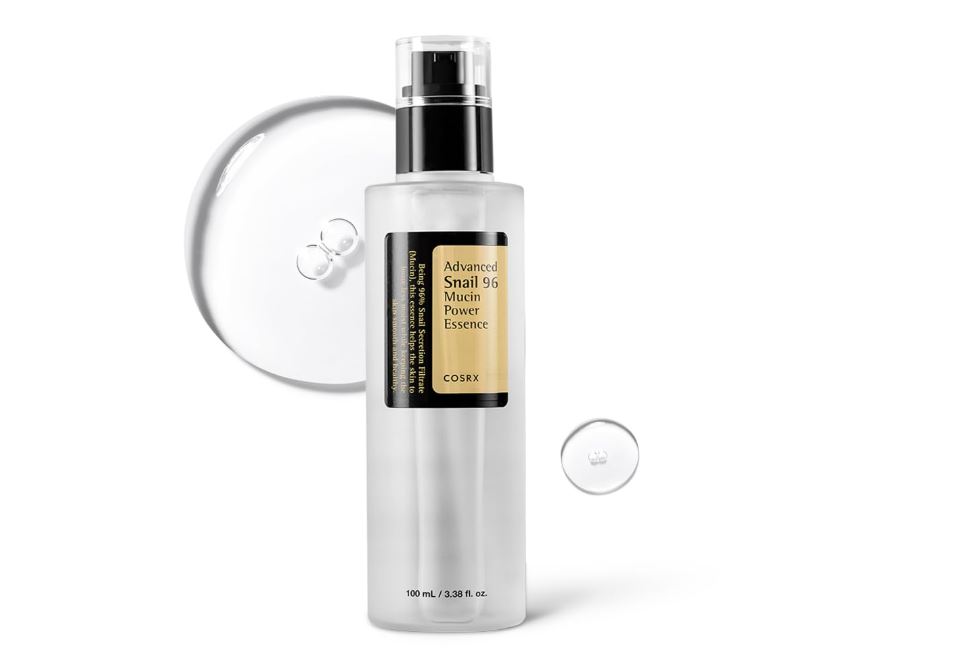

AM Step 2: The 3:1:1 Physiological Barrier Lock (Apply 60 Seconds Later)
When to use: Exactly 60 seconds after your Step 1 hydration base, while your face still feels slightly dewy.
This is the most critical step of the entire routine. Without a lipid lock, any hydration you just applied will vanish into your office air within 20 minutes.
Your skin barrier requires a 3:1:1 physiological ratio of ceramides, cholesterol, and free fatty acids to form an impenetrable vapor barrier that stops Transepidermal Water Loss (TEWL).
How to choose: Smooth a nickel-sized amount of ONE of these two formulas over your face and neck:
• For Oily, Combination, or Acne-Prone Skin: Choose Formularx Barrier Relief Lightweight Moisturizer. Formulated with ceramides, cholesterol, and niacinamide in a breathable, non-pore-clogging gel-cream.
• For Very Dry, Flaking, or Rough Skin: Choose Dot & Key Barrier Repair Ceramides Moisturizer. Enriched with 5 essential ceramides and fermented rice water for intensive lipid replenishing.
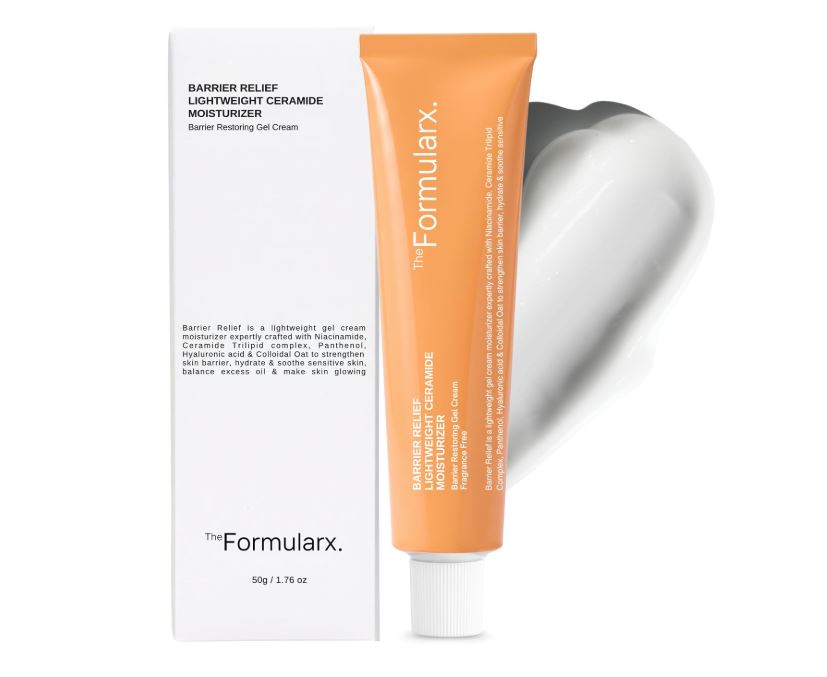
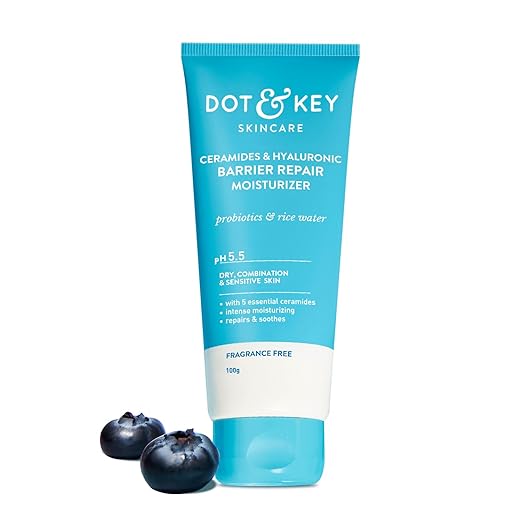
AM Step 3: Indoor Blue Light & UV Armor (Final Morning Step)
When to use: The final layer of your morning skincare routine, applied 15 minutes before leaving for work.
Many corporate workers skip sunscreen because they 'work indoors all day.' This is a major mistake. Corporate fluorescent tubes and high-nit dual monitors generate high-energy visible (HEV) blue light that oxidizes barrier lipids over 8-hour shifts, accelerating cellular dullness.
How to choose: Apply 2 finger lengths of ONE of these hydrating, non-greasy sunscreens:
• For a Weightless, Natural Finish: Choose SKIN1004 Madagascar Centella Hyalu-Cica Water-Fit Sun Serum SPF50+. Ultra-light chemical UV filters with zero white cast and no eye-sting.
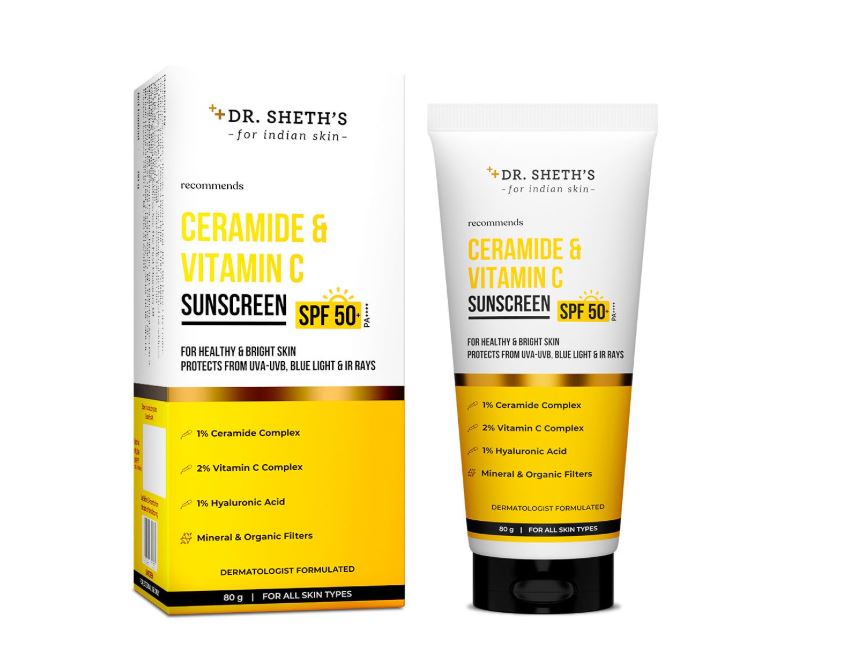
• For Tired, Dull Skin Needing a Glow: Choose Dr. Sheth's Ceramide & Vitamin C Sunscreen SPF 50+. Infused with 1% Vitamin C and ceramides to brighten screen fatigue while sealing in moisture.
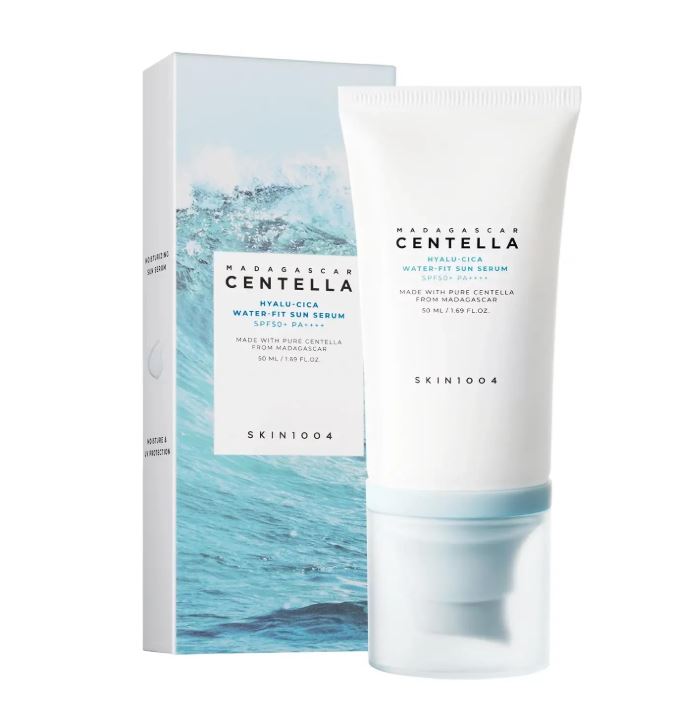
Midday Protocol: What to Do at 3 PM When Your Skin Feels Tight
The Golden Rule: Stop spraying pure water or floral face mists at your desk! As water droplets evaporate from bare skin in 20% humidity, they pull your skin's natural moisturizing factors (NMF) along with them, leaving you tighter and drier than before.
The Desk Rescue Technique: If your cheeks feel parched around 3 PM, take a pea-sized dot of your Step 2 ceramide moisturizer, warm it between your fingertips, and gently pat (do not rub) over your tight zones. It re-anchors the lipid shield without disturbing makeup or sunscreen.
PM Reset: How to Undo 8 Hours of AC Exposure Tonight
When you return home, your skin barrier is depleted of lipids and covered in a film of oxidized sebum and dry indoor dust.
1. Gentle Double Cleanse: Wash with a mild, soap-free cleanser using lukewarm (never hot) water. Avoid harsh foaming washes that strip the few remaining natural lipids.
2. The Night Cushion: Re-apply Step 1 (Snail Mucin or Centella) onto damp skin, followed by a generous layer of Step 2 (Ceramide Moisturizer). Sleeping in this moisture seal allows intercellular lipids to synthesize while you sleep.
Desk Ergonomics: Engineering Your Immediate Microclimate
While you cannot control your company's central HVAC thermostat, you can easily control your immediate 1-meter workspace sphere.
1. The USB Cool-Mist Humidifier: Placing a compact ultrasonic personal humidifier next to your monitor raises the relative humidity of your personal workstation from 20% to a comfortable 45%–50%, neutralizing ambient moisture draw.
2. The Air Vent Deflector: Look up. If the central HVAC vent is blowing cold air directly onto your crown or face, reposition your desk chair. Direct airflow physically accelerates evaporative cooling and strips your lipid mantle twice as fast.
3. Electrolyte Water Cycling: Guzzling liters of plain filtered water often just leads to frequent restroom visits without hydrating cellular tissue. Add a pinch of unrefined sea salt or coconut water to your morning flask to ensure intra-cellular fluid retention.
Test Your Barrier & Climate Score Before Buying More Products
Before spending thousands on random serums, understand exactly how hard water, local humidity, and office AC are altering your skin's biology.
Free Mirha AI Skin Scanner: Take one quick selfie in natural light. Mirha's diagnostic engine analyzes your active barrier health, transepidermal hydration levels, redness, and sebum balance in 10 seconds—then recommends a clinically matched routine tailored to your city's exact climate. Scan your skin for free →
Check Your City's Water Hardness: Hard tap water combined with dry office AC is a double-whammy for adult acne. Look up your city's TDS & water quality rating →
For Skincare Brands & E-Commerce Partners: Are your customers returning winter creams or complaining about post-launch breakouts? Integrate Mirha's B2B Climate & Telemetry API to dynamically recommend products based on your customer's live environmental conditions. Explore Mirha B2B API →
Frequently Asked Questions
Why does office air conditioning cause both dry skin and sudden afternoon oiliness?
Commercial HVAC chillers condense and extract ambient humidity, dropping indoor relative humidity below 20%. This causes rapid Transepidermal Water Loss (TEWL). To protect against microscopic cracking, your sebaceous glands overcompensate by pumping out excess sebum, creating surface shine over dehydrated cells.
Why does Hyaluronic Acid make my skin drier in an air-conditioned room?
Hyaluronic acid is an atmospheric humectant that draws moisture from its surroundings. In dry AC air with less than 30% humidity, there is no water in the air to bind. Via osmosis, the molecule reverses direction, drawing water out of your deeper dermis up to the surface where it evaporates instantly.
What is the best way to protect your skin barrier in a corporate office all day?
Apply humectants (like hyaluronic acid or snail mucin) exclusively onto damp skin, and immediately seal them with a physiological ceramide barrier cream (in a 3:1:1 ratio of ceramides, cholesterol, and fatty acids) before stepping into climate-controlled rooms.
Should I spray a facial mist at my desk when my face feels tight?
No. Pure water or floral mists evaporate rapidly in low-humidity air conditioning, stripping away your skin's natural moisturizing factors (NMF) in the process. If your skin feels tight, gently press a pea-sized amount of barrier cream over dry areas instead.
Editorial Note
Mirha & Co. reviews skincare using ingredient analysis, formulation pH compatibility, and regional tap water hardness data. Simple guides for educational purposes—always patch test new products on your skin.
Further Reading
Air Conditioning Skin Syndrome: Why Indoor AC Silently Wrecks Your Moisture Barrier (And How to Fix It)
SKINCARE · 7 minThe Cortisol-Skin Connection: How Burnout Literally Thins Your Skin Barrier
WELLNESS · 7 minThe 14-Day Pre-Diwali Glass Skin & Detox Protocol: The Unisex Guide to Reversing Post-Festive Congestion & Shaving Burnout
SKINCARE · 8 min