HAIR
The Hard Water Hair Fall Map of India: Metros Ranked by Mineral Buildup (and the Chelating Guide)
Is your city's tap water quietly destroying your hair? We rank major Indian metros by water hardness (TDS/mineral ppm) and break down the chemistry of why hard water makes your hair snap, frizz, and fall—along with the exact chelating protocol to fix it.
How this guide was written
Mirha & Co. reviews product fit by looking at ingredient context, formulation quality, regional climate, price, and real-world review signals. This is beauty guidance, not medical advice.
The Metros Water Hardness Leaderboard (TDS/PPM Ranked)
Let's skip the marketing fluff and look at the actual telemetry. If you've moved to Bangalore, Gurgaon, or Chennai and suddenly noticed your hair texture changing from normal to 'over-processed broomstick' within three months, you are not imagining it. It is not your stress (entirely), nor is it 'change of climate.' It is the municipal and borehole water chemistry.
Water hardness is measured by dissolved calcium carbonate and magnesium salts in parts per million (ppm) or Total Dissolved Solids (TDS). Here is how India's tech and commercial hubs rank in mineral intensity:
1. Gurgaon / Noida (Delhi NCR): 350 - 600+ ppm (Severe). The groundwater here is notoriously heavy, drawing from deep aquifers rich in calcium and silica. It feels slippery to wash with, but leaves a stubborn white crust on taps and hair follicles.
2. Bangalore (Outer Ring Road / Tech Corridors): 300 - 550 ppm (Severe). While central Bangalore gets Cauvery water (~150 ppm), the tech corridors rely almost exclusively on deep borewells. This water is dense with calcium carbonates that strip the hair's natural acid mantle on contact.
3. Chennai (IT Corridor): 250 - 450 ppm (High). Coastal salinity mixed with high mineral hardness creates a double whammy of dry scalp irritation and brittle hair ends.
4. Hyderabad: 200 - 350 ppm (Moderate-High). Heavy groundwater reliance in newer developments results in moderate-to-severe scaling.
5. Mumbai (Municipal): 80 - 150 ppm (Mild-Moderate). The softest municipal water on this list, thanks to lake sourcing. However, older piping systems introduce heavy rust and copper residues that still cause oxidation.
The Science: How Calcium and Magnesium Carbonates Bind to the Hair Shaft
Your hair shaft has a naturally negative electrical charge. Dissolved minerals like calcium (Ca2+) and magnesium (Mg2+) carry positive charges. In physics, opposites attract. Every time you wet your hair under a hard water shower, these positive mineral ions lock onto the negative sites of the hair cuticle.
As the water evaporates, it leaves behind a microscopically thin, crystalline mineral layer (calcium/magnesium carbonate scale). This scale does two destructive things:
1. The Moisture Block: It forms an impermeable, water-resistant barrier. No matter how many expensive hydrating masks or argan oils you slather on your hair, they cannot penetrate this mineral film. Your hair is literally starving of moisture under a layer of rock.
2. The Friction Spike: The mineral crystals rough up the hair cuticles, which normally lie flat. Instead of sliding smoothly past each other, hair strands catch, tangle, and snap during simple combing or styling. This is hair breakage, not root hair loss, but it thins out your density just the same.
Furthermore, when hard water minerals mix with standard sodium laureth sulfate (SLES) shampoos, they create 'soap scum' (calcium stearate). This scum sits on the scalp, clogging hair follicles and creating an itchy, flaking environment that restricts healthy hair growth cycles.
The Treatment Protocol: How to Chelate and Densify
If you live in a severe hard water zone, standard conditioning is useless. You need to chemically remove the minerals first. This is called chelating.
Chelating agents (like Disodium EDTA, Tetrasodium EDTA, or Phytic Acid) act like molecular claws. They bind to the calcium and magnesium ions, pulling them off the hair shaft and allowing them to be washed away completely. You should use a chelating clarifying shampoo once a week.
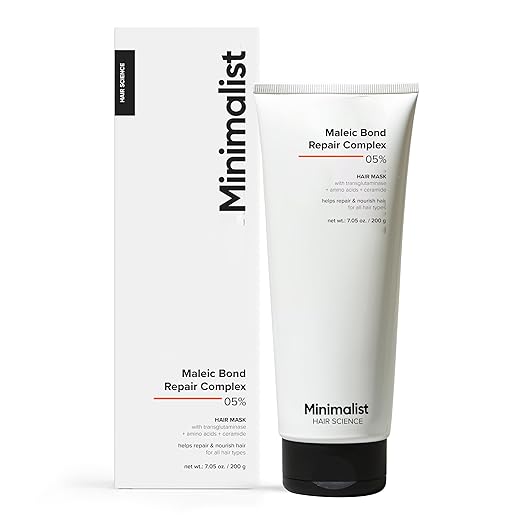
After stripping the mineral scale, follow up immediately with a deep conditioning mask that contains hydrolyzed proteins or maleic acid to rebuild the damaged cuticle bonds. Finally, apply a targeted hair density serum to stimulate the follicles that were suffocated by mineral buildup.
The Hard Water Hair Stack
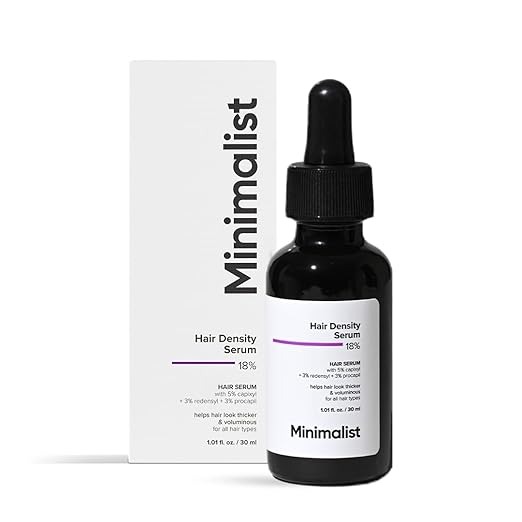
To execute this protocol, start with Detoxie Hard Water Relief Shampoo once or twice a week. It is specifically formulated with high-performance chelating agents to strip away urban mineral buildup without drying out the scalp. Follow it up with Minimalist Hair Growth Actives 18% Serum applied directly to a clean scalp every night. This multi-peptide formulation stimulates follicle cell proliferation, counteracting the thinning and shedding caused by scalp-level mineral irritation.