Most skincare advice online is written for someone in Seoul or Los Angeles. You're not that person. You're dealing with 40°C summers, 90% humidity, hard water, and pollution. This routine was built for that reality — four products, under ₹2,000 total, backed by dermatological research.
The Indian skincare market will tell you that you need twelve products, three serums, and a sheet mask every other night. You don't. The brands that push complicated routines benefit from complicated routines. Your skin doesn't.
The four categories that actually move the needle for Indian skin are: a proper cleanser, a niacinamide serum, a lightweight moisturiser, and sunscreen. Everything else — toners, essences, eye creams, mists — is optional. Get these four right first.
What follows is the science behind each step, what to look for, what to avoid, and the specific products that deliver real results at an honest price point. All links go directly to Amazon India.
Cleanser.
Clear the Slate.
Cleansing is the most underestimated step in a skincare routine. Most people in India are either over-cleansing — using harsh, foaming face washes multiple times a day — or under-cleansing, relying on micellar water that doesn't fully remove sunscreen and pollutants.
Your cleanser has one job: remove what doesn't belong on your skin without disrupting what does. That means pollution particles, excess sebum, sunscreen residue, and sweat — without stripping your skin barrier.
The skin barrier is maintained by a thin layer of lipids and natural moisturising factors. Surfactant-heavy cleansers (SLS, SLES) disrupt this barrier, leading to transepidermal water loss (TEWL). A 2019 study in the Journal of Investigative Dermatology found that even a single wash with high-surfactant cleansers caused a measurable increase in TEWL that persisted for 24 hours. For Indian skin that already deals with high UV exposure and humidity-driven barrier compromise, this matters.
Source: Fluhr JW, et al. J Invest Dermatol. 2019.What to look for in a cleanser for Indian skin: low-irritation surfactants (cocamidopropyl betaine, sodium cocoamphoacetate), pH between 4.5–5.5 (matching skin's natural pH), and no fragrance. Fragrance is the #1 cause of contact dermatitis in Indian consumers, and it adds zero skincare benefit.
Avoid cleansers with Sodium Lauryl Sulfate (SLS) as the primary surfactant, any added fragrance or parfum, walnut or apricot scrub particles (they cause micro-tears), and anything marketed as "deep pore cleansing" — these are almost always too harsh for daily use.
The two products below represent the most recommended cleansers by Indian dermatologists for barrier-sensitive and acne-prone skin respectively. Both are available on Amazon India with Prime delivery.
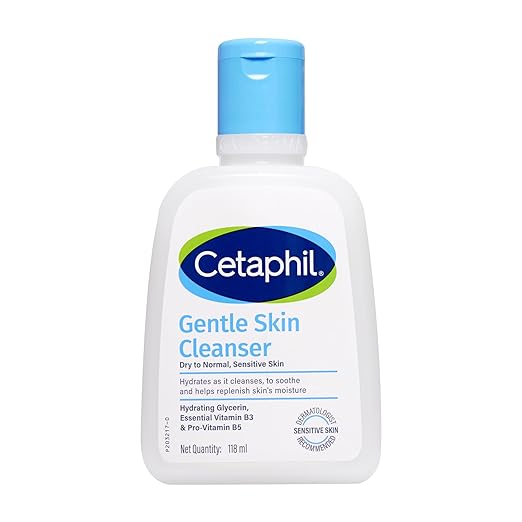
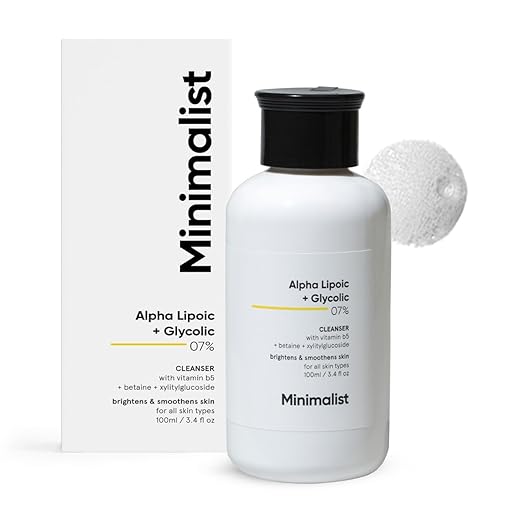
The Cetaphil Gentle Skin Cleanser has been the dermatologist standard for sensitive and dry skin for decades. The Simple Kind to Skin Refreshing Facial Wash is the better choice if you have oily or combination skin — it's soap-free, contains zinc and vitamin B3, and costs less per ml than most premium cleansers.
Niacinamide.
One Ingredient.
Many Problems.
If there is one ingredient that Indian dermatologists recommend more than any other for Indian skin concerns, it is niacinamide. Not vitamin C, not retinol, not hyaluronic acid — niacinamide. The reason is simple: it addresses the four most common skin concerns in the Indian population simultaneously.
Niacinamide (Vitamin B3) has been studied extensively for its effects on Indian and Asian skin phenotypes. A 12-week double-blind clinical trial published in the British Journal of Dermatology demonstrated that 5% niacinamide significantly reduced hyperpigmentation and improved skin tone evenness compared to vehicle control. A separate study showed 4% niacinamide reduced sebum excretion rate by 13% over 8 weeks. For post-inflammatory hyperpigmentation (PIH) — the dark marks left after acne, extremely common in Fitzpatrick types IV–VI prevalent in India — niacinamide inhibits melanosome transfer from melanocytes to keratinocytes, visibly fading marks over 8–12 weeks.
Bissett DL, et al. Br J Dermatol. 2004; Draelos ZD, et al. J Cosmet Dermatol. 2006.What niacinamide does for Indian skin specifically: It reduces excess oil production, which is exacerbated by Indian heat and humidity. It fades the dark marks that acne and sun damage leave behind — the PIH that most Indian skin is prone to. It minimises the appearance of enlarged pores, which widen in humid climates. It strengthens the skin barrier, reducing sensitivity and redness. And it does all of this gently enough to be used twice daily without purging.
The concentration sweet spot for Indian skin is 5–10% niacinamide. Below 2% shows minimal clinical effect. Above 10% can cause flushing in some individuals, though this is rare and temporary. The products below both sit in this range.
You may have read that niacinamide and vitamin C "cancel each other out." This is outdated. The nicotinic acid flushing concern only applies to niacinamide concentrations above 20% combined with very high vitamin C, and at temperatures that don't occur in product formulations. At standard usage, they are perfectly compatible and can be layered.
Apply niacinamide after cleansing on damp skin, before moisturiser. In the morning, it goes under sunscreen. At night, it goes under moisturiser. One pump is enough for the whole face.
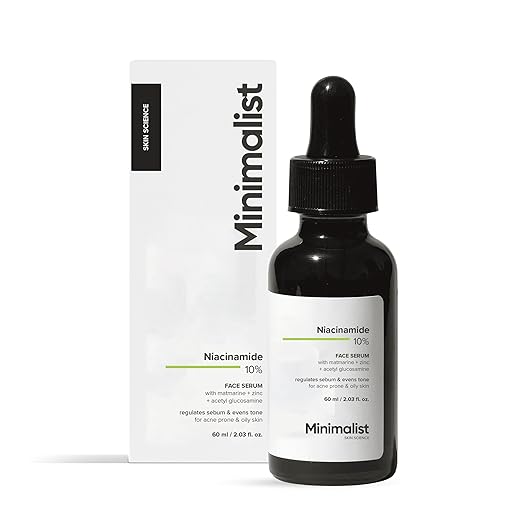
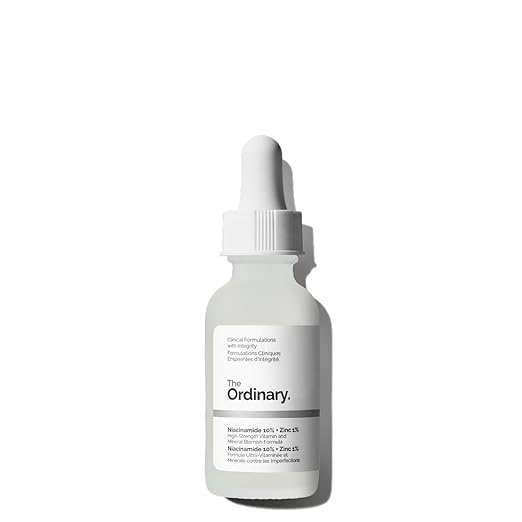
Minimalist's 10% Niacinamide + Zinc 1% is formulated specifically for Indian conditions — the zinc addition controls sebum at a separate pathway from niacinamide, making it particularly effective for oily and acne-prone skin. The Ordinary's version at the same concentration is the international benchmark and widely available on Amazon India. Both are fragrance-free, non-comedogenic, and clinically tested.
Moisturiser.
Even If You're
Oily.
This is the step that oily-skinned people skip. It is also the reason their skin produces more oil.
When the skin is dehydrated — not oily, but lacking water — it compensates by producing more sebum. This is a protective mechanism. If you skip moisturiser because you think your skin is already oily enough, you are triggering more oil production. The solution to oily skin is not less moisture. It is the right kind of moisture.
The skin has two types of hydration: oil content (sebum) and water content. These are independent systems. Oily skin refers to excess sebum; dehydrated skin refers to insufficient water in the stratum corneum. A 2018 meta-analysis in the Journal of Clinical and Aesthetic Dermatology confirmed that humectant-based moisturisers (containing glycerin, hyaluronic acid) applied to oily skin reduced transepidermal water loss without increasing sebum production, and in several cases reduced sebum secretion over 8 weeks through improved barrier function.
Loden M. J Clin Aesthet Dermatol. 2018.For Indian skin in Indian weather, the ideal moisturiser is gel-based, not cream-based. Creams are too occlusive for humid climates — they sit on top of the skin, feel heavy, and can contribute to congestion in warm months. A gel moisturiser absorbs quickly, delivers hydration without heaviness, and doesn't interfere with sunscreen application.
Ingredients to look for: glycerin (the most effective humectant at budget price points), hyaluronic acid (draws water from the environment into the skin — effective in Indian humidity), and panthenol (vitamin B5, soothes and supports barrier repair). Ingredients to avoid: fragrance, lanolin (comedogenic for acne-prone skin), and heavy silicones as primary ingredients.
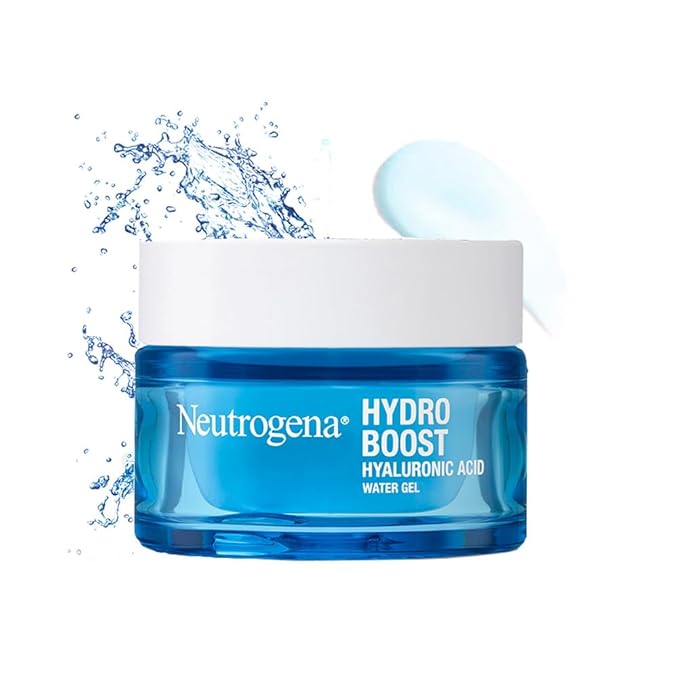
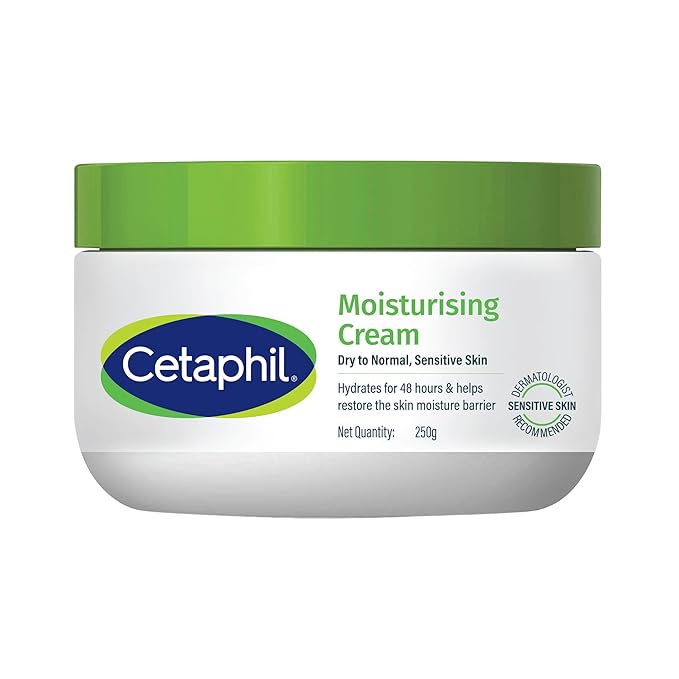
Pond's Super Light Gel is one of the most consistently recommended budget moisturisers for Indian oily skin — it's lightweight, non-comedogenic, and absorbs within seconds. For dry or normal skin, especially in winter or under air conditioning, Cetaphil's moisturising lotion provides longer-lasting barrier support with its ceramide-adjacent formulation.
Sunscreen.
If You Skip
This, Nothing
Else Matters.
India receives some of the highest UV radiation levels in the world. UV index readings of 8–12 (very high to extreme) are standard in most Indian cities for six or more months of the year. This is not a western concern that doesn't apply to Indian skin. It is, in fact, a more urgent concern for Indian skin.
A misconception persists that darker skin does not need sunscreen because melanin provides protection. Melanin does provide some UV protection — roughly equivalent to SPF 13. This is not sufficient. UV radiation causes DNA damage in melanocytes regardless of skin tone, leading to hyperpigmentation, photoageing, and in long-term exposure, increased skin cancer risk. A 2020 study in the Indian Journal of Dermatology found that 72% of cases of melasma — the most common pigmentation disorder affecting Indian women and men — were directly attributable to UV exposure without adequate sun protection. Sunscreen with SPF 30 or above blocks 97% of UVB. SPF 50 blocks 98%. The difference between wearing SPF 30 and SPF 50 is marginal. The difference between wearing SPF 30 and nothing is not.
Sarkar R, et al. Indian J Dermatol. 2020.For daily use in Indian conditions, the sunscreen you choose must meet three criteria: broad spectrum (blocking both UVA and UVB — look for PA++++ rating alongside SPF), no white cast (chemical or hybrid formulas work better for Indian skin tones than pure mineral sunscreens), and non-greasy texture (you will not wear a sunscreen that feels uncomfortable — texture compliance is a real issue in dermatology).
Apply as the last step in your morning routine, after moisturiser. Use a full two finger-lengths (approximately 1/4 teaspoon for the face). Reapply every 2–3 hours if you are outdoors. Indoors near windows, once in the morning is sufficient.
Most people apply enough sunscreen in the morning but never reapply. SPF protection degrades with UV exposure, sweat, and sebum over 2–3 hours. If you're commuting, outdoors, or near a window for significant time, a SPF setting powder or SPF mist for reapplication is practical. But for an office or indoor lifestyle, morning application of SPF 50 is sufficient.
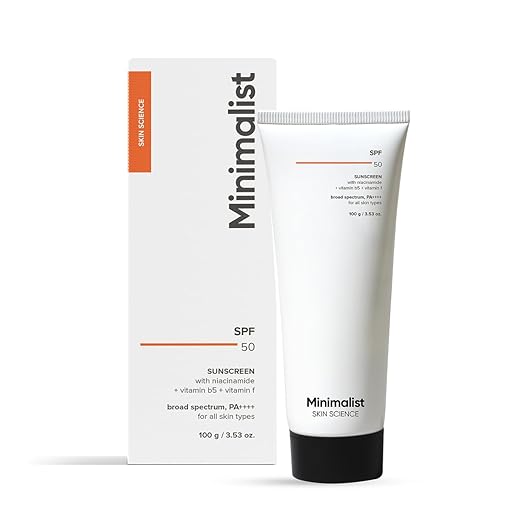
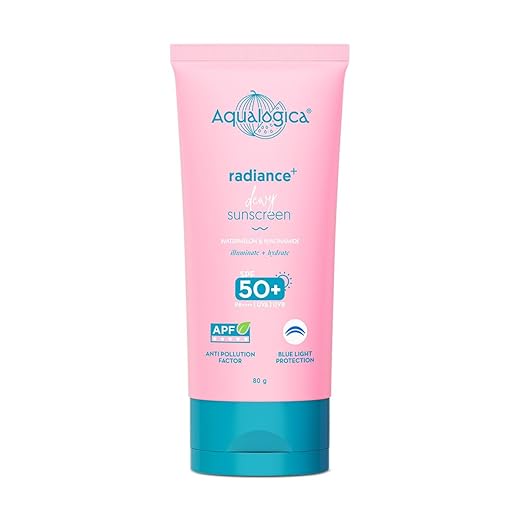
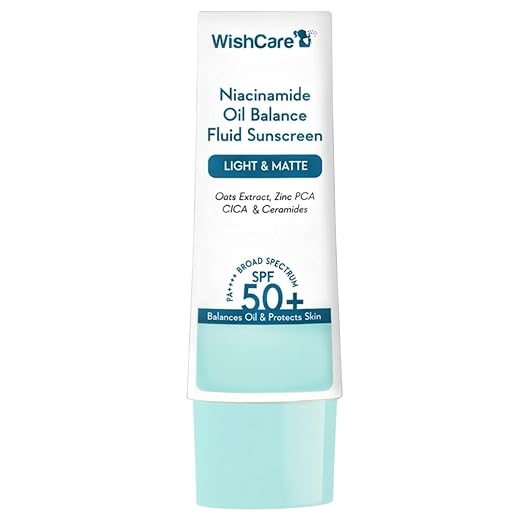
These three represent the best-reviewed, dermatologist-endorsed options at this price point on Amazon India. All are SPF 50 or above with PA++++ UVA protection, appropriate for Indian UV conditions, and have minimal to no white cast on medium to deep skin tones.
The Complete Routine
Four products. Two uses daily. The order matters — actives before occlusion, sunscreen last in the morning.
Realistic Expectations
Skincare is not fast. Anyone telling you a product will transform your skin in 7 days is selling you something. Here is what the research actually says about timelines:
2–4 weeks: Skin texture improves. Fewer new breakouts. Skin feels more comfortable and less reactive.
6–8 weeks: Niacinamide begins visibly reducing existing dark marks and post-acne hyperpigmentation. Oil production reduces in humid conditions.
12 weeks: Full benefits of barrier repair become visible — skin looks clearer, more even-toned, and responds better to environmental stress.
The single most important variable is consistency. Using the right products three days a week delivers worse results than using average products every day. Start simple. Build the habit. Then optimise.
Start Simple.
Stay Consistent.
Four products. Six to eight weeks. That is the entire brief. No 10-step routine. No expensive serums. Just the right basics — done daily.
This post contains affiliate links to Amazon India. If you purchase through these links, Mirha & Co. earns a small commission at no additional cost to you. This commission does not influence product selection — all recommendations are based on ingredient research, dermatologist guidance, and verified customer review data. Products are not gifted or sponsored.
About this guide
Curated by Mirha & Co.
We curate skincare products based on ingredient quality, real user reviews, and suitability for Indian skin and climate conditions. No paid placements — only products we genuinely believe are worth trying.
Affiliate links may earn us a commission at no extra cost to you.